Mold Remediation & Removal
Once we know what we're dealing with, remediation is the actual removal and treatment — done in a way that keeps spores from spreading to the rest of the house while the work happens.
How the work is contained
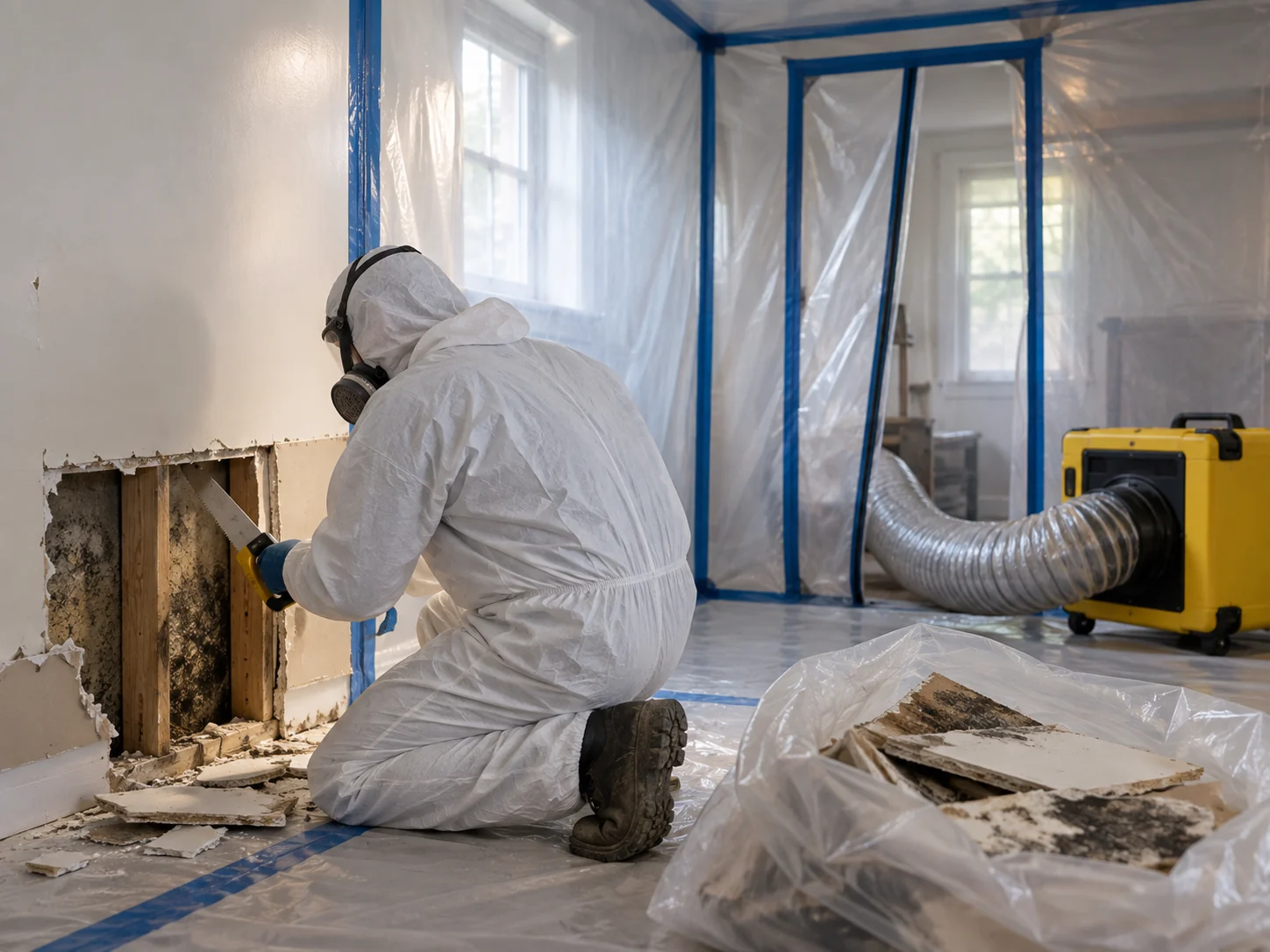
Before any affected material is disturbed, we seal off the work area with plastic sheeting and negative-air pressure where the job calls for it. This is standard industry practice, not an upsell — skipping containment is how a contained problem in one room becomes a house-wide one. It matters more in older West Roxbury homes than in newer construction, because the cavities between floors tend to be more interconnected and give spores an easier path upstairs.
What actually gets removed
Porous materials that have absorbed mold — drywall, insulation, some subflooring — typically can't be cleaned and get removed and replaced. Non-porous surfaces like framing lumber, concrete, and metal are HEPA-vacuumed and treated with an antimicrobial rather than replaced. How much replacement a job needs is usually the single biggest factor in what it costs.
Do you have to leave the house?
For a single room or basement area, most households stay in the home; we seal the work zone and you simply avoid that area for the 1-3 days it takes. Whole-house jobs are rare and we'll tell you upfront if that's what yours needs.
The mold remediation & removal process
Contain the Area
Plastic sheeting and negative-air pressure (where the job calls for it) seal off the work area before anything is disturbed, so a contained problem stays contained.
Remove & Treat Affected Material
Porous materials that absorbed mold — drywall, insulation, some subflooring — are removed and replaced. Non-porous surfaces are HEPA-vacuumed and treated with an antimicrobial.
Clean the Work Area
Surfaces and air in the contained zone are cleaned before containment comes down, not just the visibly affected spot.
Final Clearance Check
Before containment comes down, the area is checked to confirm it is dry and visibly clean. Where you need that documented — for insurance or a sale — independent post-remediation verification testing is the usual route, arranged before the job is closed out.
About mold remediation & removal
Do I need to leave my home during remediation?
For almost all residential jobs, no. The work area is contained and sealed, and the rest of the house is unaffected. We'll only recommend staying elsewhere for extensive whole-house jobs, which are uncommon.
Will the mold come back after remediation?
Not if the moisture source that caused it gets fixed. Remediation removes the existing mold; it doesn't stop new mold from growing if the underlying leak or humidity problem is left alone, which is why we always identify the cause during the inspection, not just treat what's visible.
What's the difference between remediation and cleaning it myself?
Cleaning treats the surface; remediation addresses what's underneath and behind it too, with containment so spores don't spread while the work happens. For anything beyond a small, isolated spot, cleaning alone tends to just delay the problem rather than solve it.
Do you replace drywall and flooring, or just remove the mold?
Both, when needed. Porous material that's absorbed mold typically gets removed and replaced as part of the same job, rather than left for you to handle separately afterward.
Doesn't spraying it kill the mold?
Killing mold and removing it are not the same job, and this is the most common shortcut to watch for when comparing quotes. A biocide can kill what it reaches on the surface, but dead mold left inside porous material is still there — it can still shed fragments, and it still stains. It also does nothing about the moisture that grew it. Spraying has a place as one step within a wider scope; it is not a substitute for removing affected material and fixing the cause.
Free assessment, no obligation
Describe the situation and you'll get a straight answer on whether this is the service you need.