Air Duct & HVAC Mold Treatment
Mold inside ductwork is easy to miss because it's out of sight, but it's one of the most effective ways for spores to spread — every time the system runs, it pushes air through every room in the house.
Why HVAC mold is different
A single moldy patch in a basement stays mostly in that basement until it's disturbed. Mold growing inside supply or return ductwork gets aerosolized and distributed continuously, which is why homes with musty odors in every room — not just one — often have an HVAC source rather than a localized one.
What the inspection covers
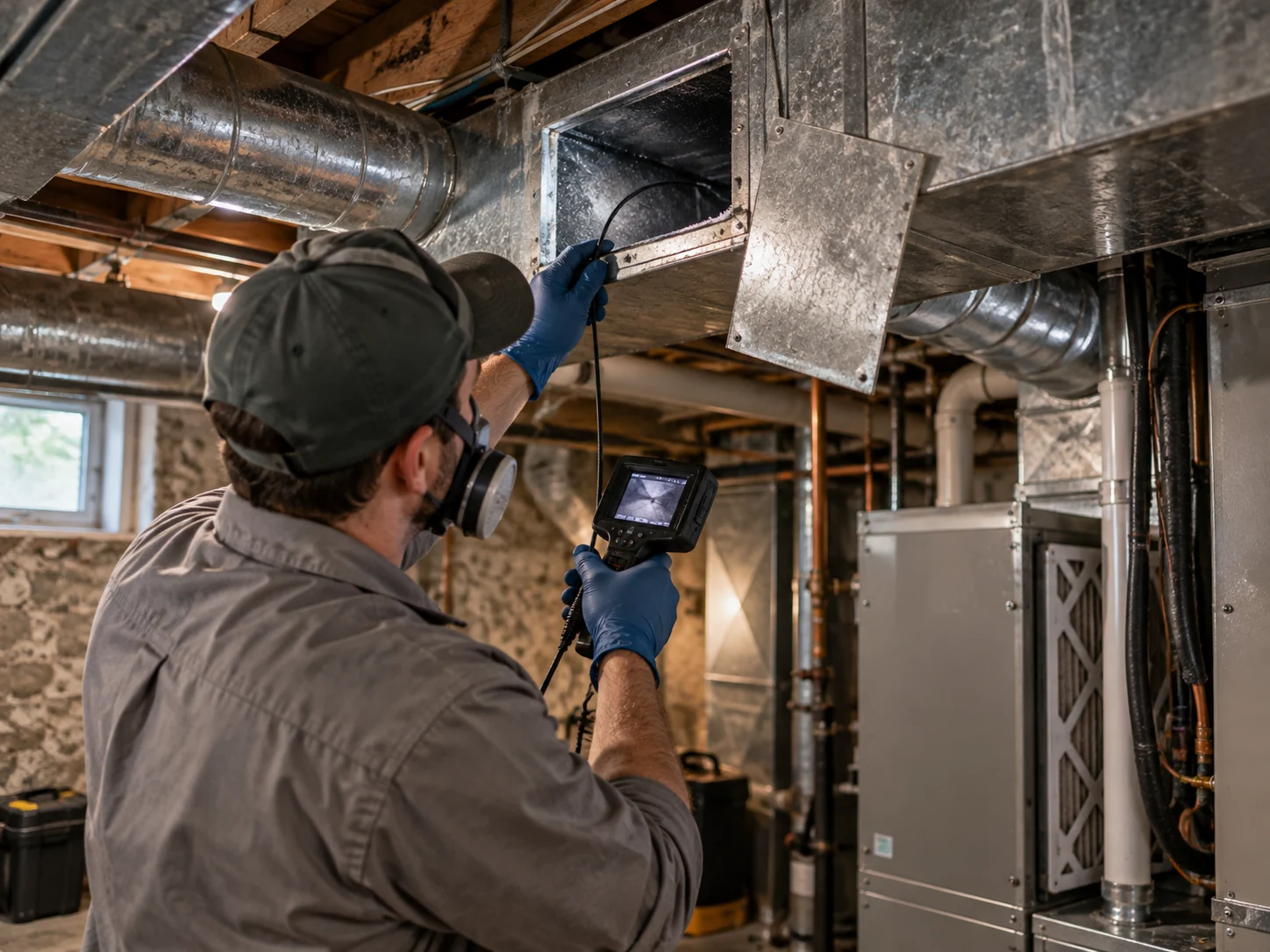
We check supply and return lines, the coil and drain pan on central AC systems (a very common growth spot due to condensation), and any exposed ductwork in the basement or attic. A flashlight and camera inspection usually tells us what we need to know without opening up the whole system. In most West Roxbury homes that ductwork runs through an unconditioned basement, where summer condensation on the outside of the ducts becomes a moisture source in its own right.
Treatment vs. full duct replacement
Most cases are resolved with cleaning and antimicrobial treatment of the affected sections. Full duct replacement is only necessary when ductwork itself has degraded (torn insulation, rusted-through metal) badly enough that mold has taken hold in the material itself, not just on a surface — which is also the difference between a modest job and an expensive one, as the cost guide explains.
The air duct & hvac mold treatment process
Duct & Coil Inspection
A flashlight-and-camera check of supply and return lines, the coil and drain pan on central AC systems, and any exposed ductwork in the basement or attic.
Treat or Replace
Most cases are cleaning and antimicrobial treatment of the affected sections. Full duct replacement only happens when the ductwork itself has degraded badly enough that mold has taken hold in the material.
Confirm Airflow Is Clean
A final check before the system is treated as resolved.
About air duct & hvac mold treatment
Can mold in ducts make my family sick?
Airborne mold spores can trigger allergy-like symptoms and aggravate asthma in sensitive people, particularly with prolonged exposure. It's not typically a medical emergency, but it's a legitimate reason to have it addressed rather than ignored.
How do I know if my HVAC system has mold?
A musty smell that's noticeably stronger when the system is running, or that's present throughout the house rather than one room, is the most common sign. Visible dust with dark or greenish patches at supply vents is another. Dust on its own is not mold, though — every duct system accumulates it, and grey household dust at a vent is normal rather than a warning sign.
Does regular duct cleaning remove mold?
Not reliably. Duct cleaning removes dust and loose debris; if mold has actually colonized a surface inside the system, that needs the same containment-and-treatment approach as any other remediation, not just a cleaning pass.
Do I need to replace my whole HVAC system?
Almost never. Most cases are resolved by treating the affected sections — full replacement is only needed when the ductwork itself has physically degraded, not just because mold was present.
Free assessment, no obligation
Describe the situation and you'll get a straight answer on whether this is the service you need.