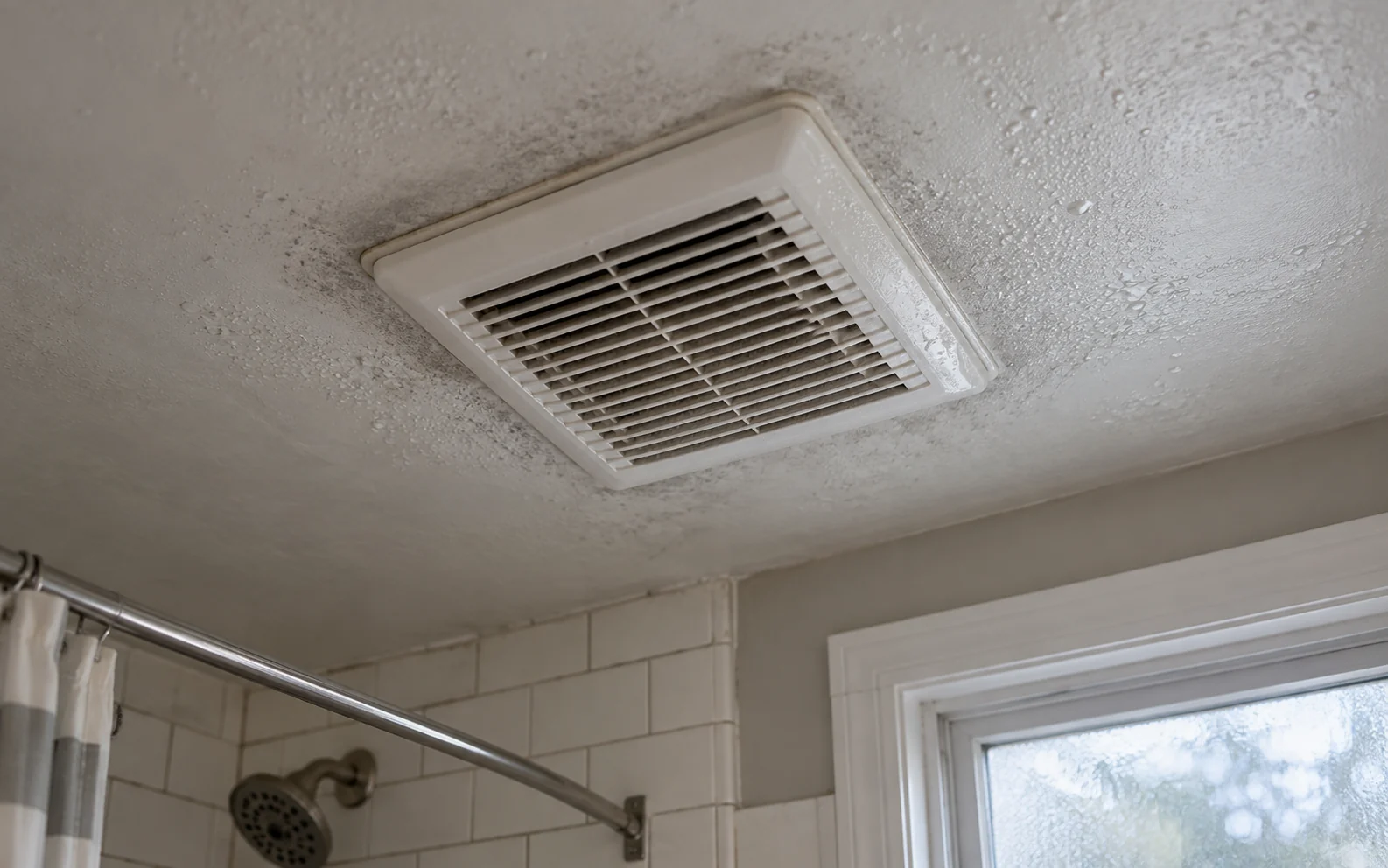
Bathrooms produce more airborne moisture than any other room in a house, in short intense bursts, usually with the door closed. So some degree of growth on tile and grout is extremely common, and most of it is genuinely a cleaning job. The useful question is not whether you have any, but whether it has moved past the surface.
The cases that are ordinarily DIY
Growth on hard, non-porous surfaces — glazed tile, glass, sealed metal, the face of grout — is generally within reach of routine household cleaning. It sits on top of the material rather than growing into it. On these surfaces it is also frequently mildew rather than mold, which is a meaningfully different thing and clears more easily.
Two conditions make that cleaning stick: ventilating properly while you work, and fixing whatever keeps the surface wet. Cleaning without addressing the moisture just resets a clock.
The signs it has gone further
Some situations are past the point where wiping helps:
- Growth on or through painted drywall, particularly on the ceiling above a shower. Drywall is porous — what is visible on the surface is rarely the full extent.
- Soft or spongy areas in the wall or floor, especially around the base of the toilet, the tub surround or a shower niche. That suggests water has been in the structure for a while.
- It returns within weeks of a thorough clean. Recurrence is a moisture signal, not a cleaning-technique problem.
- Staining that spreads beyond the wet zone — up a wall, onto an adjacent ceiling, or into an adjoining room — which suggests water is travelling inside the assembly.
- Persistent musty smell with nothing visible. Bathrooms can conceal growth behind tile, under flooring, or inside a wall cavity around a slow supply-line or drain leak.
Anything on porous material, anything you would need to open a wall to reach, and anything larger than a small isolated patch is worth assessing rather than attacking with a brush. Disturbing growth on porous material without containment is a reliable way to spread it into the rest of the house.
Ventilation is usually the real fix
An extractor fan is only doing its job if three things are true.
It is actually strong enough for the room. An undersized fan runs constantly and clears very little.
It runs long enough. Most of the moisture from a shower is still airborne when the fan is switched off with the light. Running it for fifteen to twenty minutes afterwards does more than anything else on this list. A timer or humidity-sensing switch makes this automatic.
It vents outside. This is the one that gets missed. A fan ducted into an attic or a ceiling void is not removing moisture from the house at all — it is relocating it somewhere colder, which is a common cause of attic problems. Follow the duct if you can, and confirm it terminates at an exterior vent.
Where there is no fan at all, an openable window helps but is unreliable in a New England winter, when nobody opens it.
The less obvious sources
Not all bathroom moisture comes from the shower. A slow leak at a supply connection, a failed wax seal under the toilet, or a cracked grout line letting water behind tile will all keep an area damp continuously rather than intermittently — and continuous damp is what supports growth into materials rather than on them.
That distinction is why recurring bathroom growth sometimes turns out to be a plumbing problem wearing a mold costume. If cleaning and better ventilation haven’t held, having someone check for a source behind the surface is usually the next sensible step rather than a stronger cleaner.